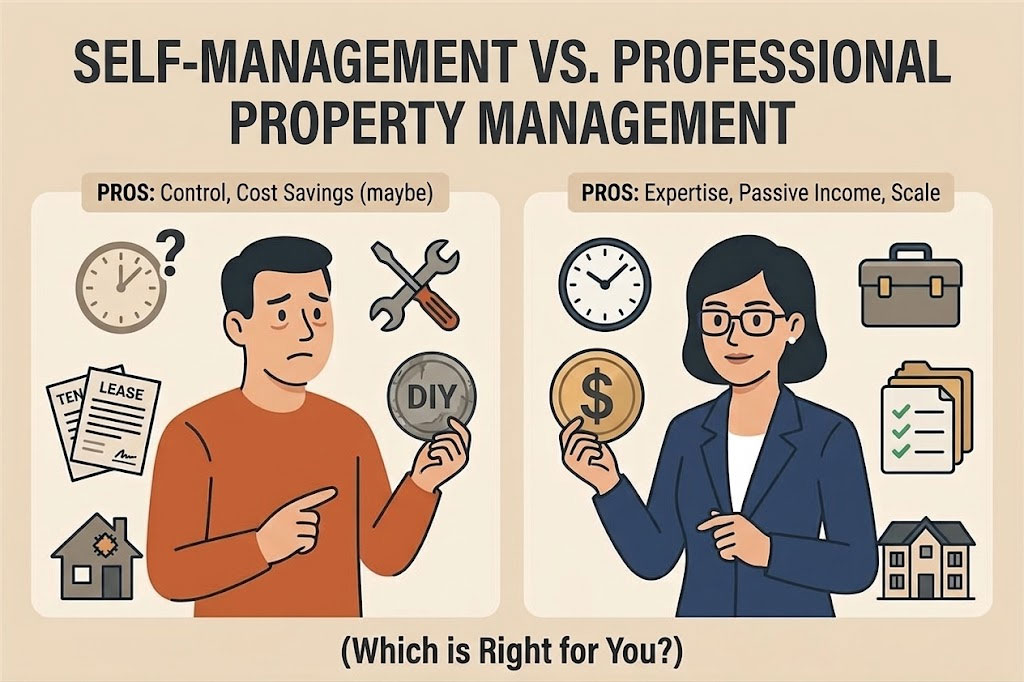
Owning a rental property sounds straightforward until the day-to-day responsibilities start piling up. One missed maintenance call turns into three. A late-night plumbing issue interrupts your weekend. A tenant stops responding after rent is overdue. Suddenly, what looked like passive income feels a lot more active than expected.
At some point, almost every landlord asks the same question: should you manage the property yourself or hire a professional property management company?
There is no universal answer because the right choice depends on your schedule, experience, investment goals, personality, and the type of property you own. What works perfectly for one landlord may create unnecessary stress for another.
If you are trying to decide between self-management and professional management, here is what you should realistically consider before making the call.
Why Some Landlords Prefer Managing Properties Themselves
For many owners, self-management starts with a simple reason: saving money.
Property management companies typically charge a percentage of the monthly rent, and some landlords would rather keep that income in-house, especially if they only own one property.
But cost is not the only reason people choose the DIY route.
You Stay in Full Control
Self-managing gives you direct oversight of everything happening with the property.
You choose the tenants, approve repairs, set communication standards, and decide how problems are handled. Some landlords prefer being closely involved rather than relying on a third party to make decisions on their behalf.
That level of control can be valuable, especially for owners who are detail-oriented or highly protective of their investment.
It Can Work Well for Local Landlords
Managing a property yourself becomes much easier when:
- You live nearby
- The property is in good condition
- You have reliable contractors already
- Your tenants are stable and cooperative
- You have enough free time to stay responsive
In these situations, self-management may feel completely manageable.
You Learn the Rental Business Faster
Some investors intentionally self-manage early properties to gain experience.
Handling leases, maintenance, tenant communication, and rent collection firsthand can teach you a lot about how rental properties actually operate behind the scenes. That knowledge can become valuable later if you expand your portfolio.
The Challenges Most DIY Landlords Underestimate
Self-management sounds simple when everything is running smoothly. The real test comes when something goes wrong.
And eventually, something always does.
Rental Properties Rarely Operate on a Schedule
Tenants do not only call during business hours.
Water heaters fail at inconvenient times. HVAC systems stop working during heat waves. Tenants lock themselves out. Appliances break right before holidays.
Managing these situations means being consistently available, even when it interrupts your personal schedule.
For some landlords, that constant responsibility becomes exhausting over time.
Tenant Issues Can Become Emotionally Draining
Many first-time landlords struggle with difficult conversations.
Late payments, lease violations, property damage, neighbor complaints, and eviction situations are uncomfortable to deal with, especially if you are naturally conflict-avoidant.
Professional managers are often better equipped to handle these situations objectively because they are not emotionally attached to the property or tenant relationship.
Legal Mistakes Can Get Expensive
Landlord-tenant laws in the DMV can be strict, and regulations are not always identical across jurisdictions.
A poorly written lease, incorrect notice period, mishandled security deposit, or inconsistent screening process can create legal problems quickly.
This is one of the biggest reasons some owners eventually move away from self-management.
What Professional Property Management Actually Handles
Some landlords assume property managers only collect rent and coordinate repairs. In reality, Full-service property management often covers much more than that.
Depending on the company, services may include:
- Marketing vacant properties
- Tenant screening
- Lease preparation
- Rent collection
- Maintenance coordination
- Vendor management
- Property inspections
- Lease renewals
- Handling tenant disputes
- Compliance with local rental regulations
The goal is not simply convenience. Good property management is designed to protect the property, reduce vacancy time, and create more stable long-term operations.
When Hiring a Property Manager Makes More Sense
Professional management is not necessary for every landlord, but certain situations make it far more valuable.
You Live Far From the Property
Long-distance rentals are difficult to manage efficiently without local support.
Even small maintenance issues become complicated when you are hours away or living in another state entirely. A local property manager can respond faster and coordinate vendors more effectively.
You Have Limited Time
Some landlords simply do not want rental management services consuming their evenings and weekends.
If your primary career, business, or family responsibilities already take up most of your time, outsourcing management can reduce stress significantly.
You Own Multiple Properties
As portfolios grow, self-management becomes harder to scale.
What feels manageable with one property may become overwhelming with several units, multiple tenants, ongoing repairs, and lease renewals happening simultaneously.
Professional systems often become more valuable as rental operations expand.
You Want More Passive Ownership
Not every investor wants to be deeply involved in daily operations.
Some owners are comfortable trading a percentage of monthly income for fewer phone calls, fewer emergencies, and less operational responsibility overall.
For them, professional property management services creates more freedom.
The Financial Side Is Not Always as Simple as It Looks
A lot of landlords focus only on management fees when comparing options.
But the bigger financial question is often this: what mistakes could poor management create?
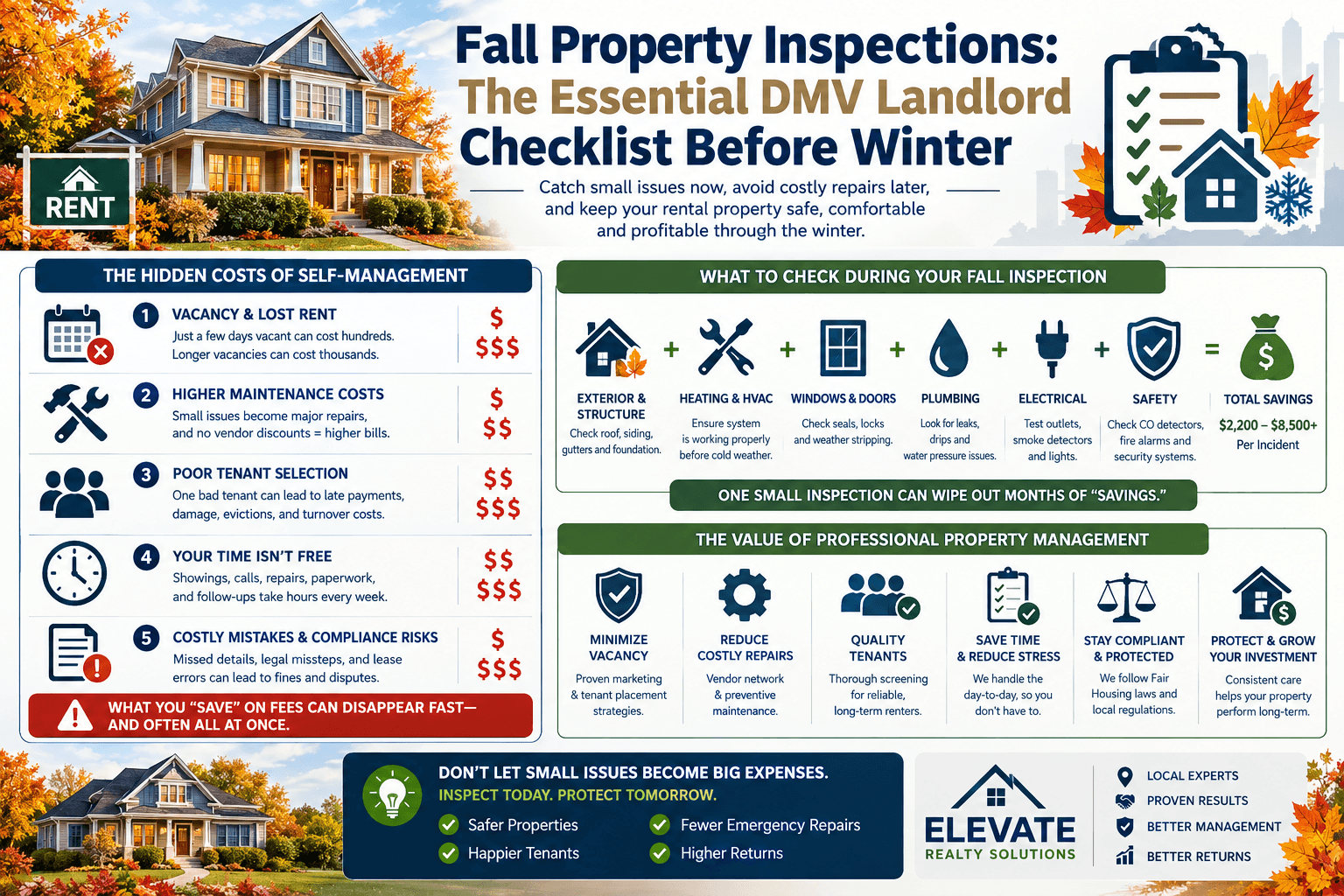
A bad tenant, extended vacancy, neglected maintenance issue, or legal dispute can easily cost far more than several months of management fees.
At the same time, not every property requires professional oversight. Some experienced landlords manage properties extremely well on their own and operate efficiently without outside help.
The important thing is evaluating the full picture, not just the monthly percentage.
Questions Worth Asking Yourself Before Deciding
Before choosing either path, take an honest look at your situation.
Ask yourself:
- Do I realistically have time to manage this property consistently?
- Am I comfortable handling tenant conflicts?
- Can I respond quickly during emergencies?
- Do I understand local rental regulations?
- Is saving management fees worth the stress and time commitment?
- Am I looking for active involvement or passive income?
Your answers will usually point you toward the better fit.
There Is No “Correct” Option for Every Landlord
Some owners thrive with self-management and enjoy staying involved. Others quickly realize they would rather hand operations to professionals and focus on the investment side instead.
Neither approach is automatically better.
The best decision is the one that fits your goals, availability, and tolerance for responsibility.
A rental property should support your long-term financial plans, not constantly compete with your personal life and peace of mind.
Need Help Managing Your Rental Property?
Whether you are renting out your first property or trying to decide if self-management is still worth the workload, Elevate Realty Solutions can help you navigate the next step. Our team works with landlords across the DMV to simplify rental ownership, reduce stress, and keep properties running smoothly.