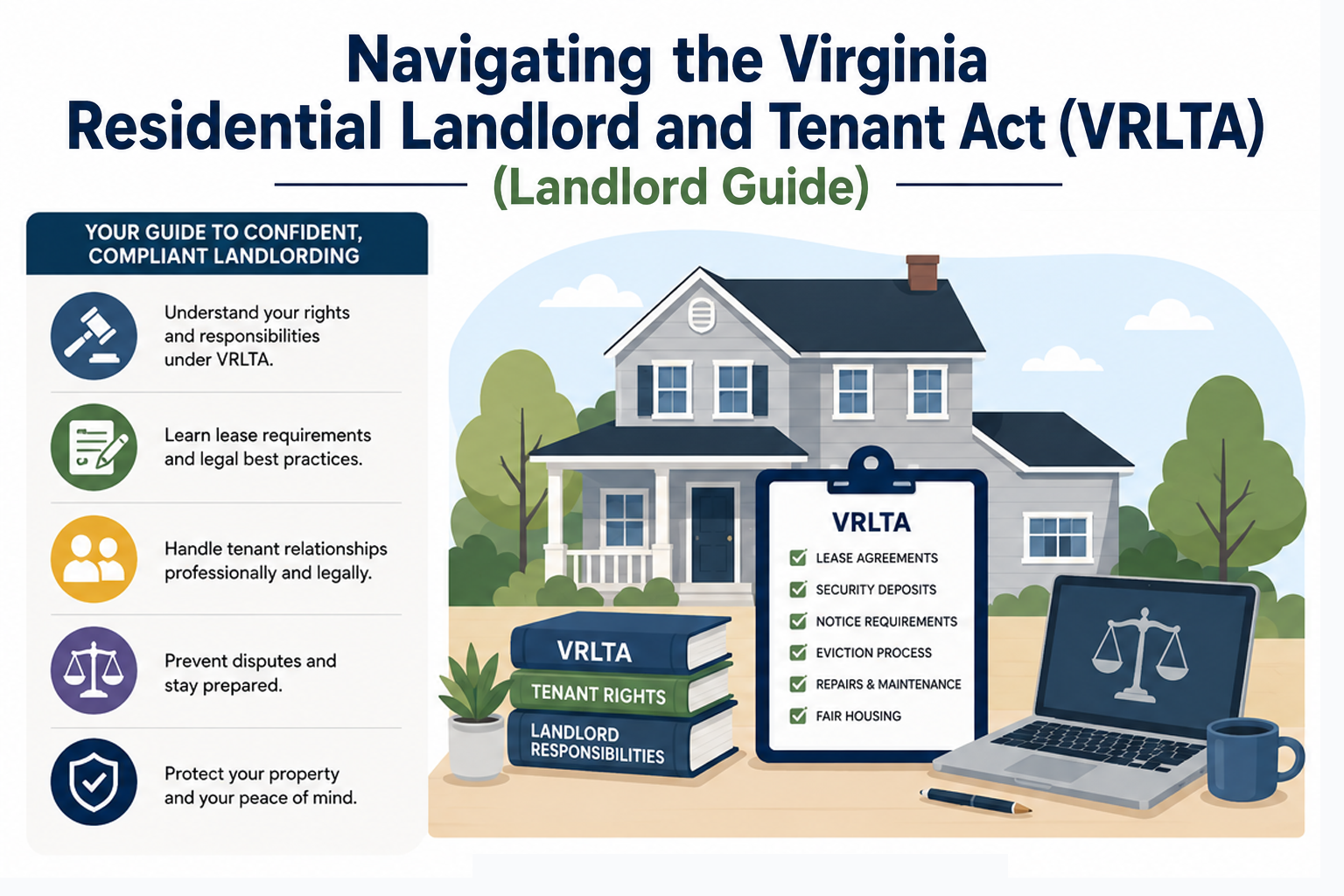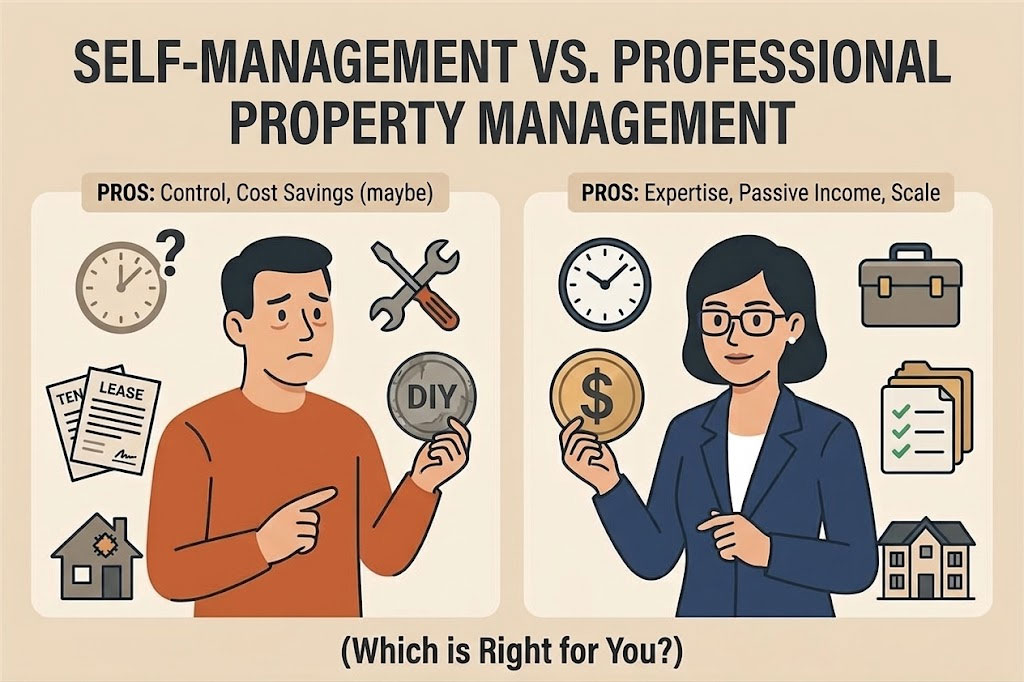
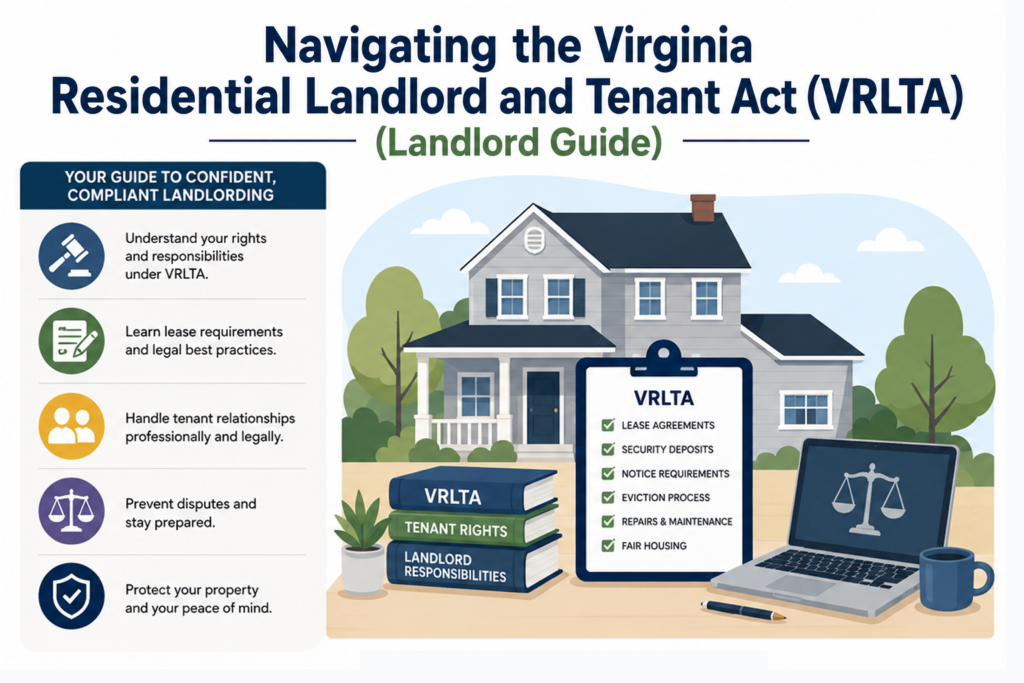
Self-managing a residential rental property in Virginia requires a sharp shift from thinking like a property owner to operating like a highly compliant business entity. The legal framework governing this relationship is the Virginia Residential Landlord and Tenant Act (VRLTA), located at Sections 55.1-1200 through 55.1-1262 of the Code of Virginia.
The VRLTA establishes the baseline statutory rights, remedies, and obligations for both landlords and tenants across the Commonwealth. In Virginia, local municipal or county ordinances cannot override or contradict VRLTA provisions. Failing to understand the precise mechanics of this legislation is one of the quickest ways a private landlord can face expensive statutory damages, invalid lease clauses, or dismissed court actions.
This guide breaks down the core compliance pillars every Virginia landlord must master to protect their investment and maintain a healthy, professional relationship with their residents.
Onboarding and Lease Execution Mandates
Compliance under the VRLTA begins long before a tenant moves their first box into the property. Virginia law establishes strict protocols regarding what must be provided to a tenant at lease signing, how payments must be handled, and what terms are explicitly prohibited from appearing in a written rental agreement.
Required Documentation and Disclosures
Every single written lease agreement executed in Virginia must be accompanied by the Statement of Tenant’s Rights and Responsibilities, a formal document issued by the Virginia Department of Housing and Community Development (DHCD). Both the landlord and the prospective tenant must sign this form, acknowledging receipt.
Important Administrative Rule: A written rental agreement does not legally take effect until both parties have signed the Statement of Tenant’s Rights and Responsibilities acknowledgment form. Landlords must provide a copy of both the fully executed lease and the signed statement to the tenant within one month of the effective date.
Payment Flexibility and Fee Restrictions
Virginia law regulates how landlords can accept funds and what fees they can legally charge.
- Expanded Payment Methods: Landlords must accept rent and security deposit payments via check or money order in addition to any electronic methods or online portals. You cannot force a tenant to use a single online payment system if doing so completely blocks them from paying by check or money order.
- Fee-Free Alternatives: Landlords must provide at least one method of paying rent that does not carry an additional processing or rent collection fee for the tenant.
- Processing Fee Caps: If a third party imposes a processing fee for electronic payments, you can pass that cost along, but you are strictly prohibited from inflating that fee or adding predatory “junk” processing fees above the actual out-of-pocket expense.
Explicitly Prohibited Lease Clauses
You cannot write your own rules into a lease agreement if they violate state statute. Under the VRLTA, any clause that forces a tenant to waive their statutory rights, automatically agrees to pay the landlord’s legal fees without a court order, or purports to waive the landlord’s basic liability under the law is completely void and unenforceable.
Managing the Security Deposit Account
The administration of security deposits is heavily litigated in Virginia General District Courts. Mismanaging these funds or missing statutory deadlines can result in a judge ordering a landlord to pay double the original deposit amount back to the tenant, plus court costs and legal fees.
The VRLTA Security Deposit Roadmap
| MAX CAP | Cannot exceed two (2) months’ periodic rent |
| MOVE-IN REPORT | Must provide itemized condition report in 5 days |
| HOLDING PERIOD | State law requires zero interest paid to tenant |
| FINAL CEILING | 45 days post-vacency to refund or itemize |
The Statutory Ceiling
A Virginia landlord cannot demand a security deposit that exceeds a total value equal to two months of periodic rent. This cap includes any separate deposits for pets or additional damage insurance premiums collected at the start of the tenancy.
The Move-In Inspection Window
Within five days of a tenant moving into the property, the landlord must provide a written report itemizing any pre-existing damages to the dwelling unit. The tenant has the right to submit additional written objections within five days of receiving this report. This signed document serves as the historical baseline for assessing damage at the end of the lease.
The 45-Day Countdown
Once a tenant completely vacates the property and surrenders the keys, a rigid 45-day statutory clock begins. Within this window, the landlord must complete the following actions:
- Inspect the property for damages exceeding normal wear and tear.
- Compile an itemized list of any necessary deductions.
- Mail the remaining balance of the deposit alongside the itemized list and copies of actual receipts or invoices confirming the cost of repairs.
If you miss this 45-day deadline, you lose the legal right to make any deductions from the deposit for physical damages, and the tenant can successfully sue for structural non-compliance.
Habitability and Property Maintenance Commitments
Under the VRLTA, a landlord has an ongoing, non-delegable duty to maintain the rental unit in a fit, clean, and habitable condition. You cannot shift the financial burden of structural maintenance or system lifespans onto a tenant through clever lease language and property maintenance.
Core Landlord Obligations
Landlords must comply fully with all applicable building and housing codes affecting health and safety. This requires maintaining all electrical, plumbing, sanitary, ventilation, and HVAC systems in good working order. Landlords are also responsible for maintaining common areas and ensuring the property has access to essential services, including running water, hot water, heat, and electricity.
Maintenance Fee Prohibitions
Private landlords are strictly prohibited from imposing flat maintenance fees or repair deductibles for the general upkeep of a dwelling unit. You cannot charge a tenant a standard fee for fixing a failing appliance or an aging plumbing system. Landlords can only charge a tenant for repairs if the damage was directly caused by the tenant’s deliberate misuse, neglect, or violation of the lease terms.
Tenant Recourse: The Tenant Assertion Process
If a landlord fails to address a serious repair issue affecting health or safety within a reasonable timeframe (typically not to exceed 30 days from receiving written notice), the tenant has specific legal remedies.
The tenant can file a Tenant Assertion in the local General District Court. This allows the tenant to pay their monthly rent into a court-ordered escrow account rather than directly to the landlord. The court holds these funds until the landlord proves the repairs have been completed satisfactorily. Tenants are never legally permitted to simply withhold rent on their own without following this formal court process.
Landlord Access and Privacy Protections
Owning the physical deed to a property does not grant a landlord the right to enter a tenant-occupied home whenever they please. The VRLTA provides robust privacy protections for residents while reserving reasonable access rights for property owners.
- Routine Entry Notice: Landlords must provide the tenant with a minimum of 24 hours of written notice before entering the property for routine maintenance, scheduled inspections, or showing the property to prospective buyers or tenants.
- Reasonable Timing: Entry must occur at reasonable times during the day, and landlords cannot use their right of access to systematically harass or disturb the tenant’s quiet enjoyment of the home.
- Emergency Exceptions: In a true emergency involving an active water leak, fire, or immediate threat to life or structural integrity, the landlord or their authorized contractors may enter the dwelling unit without prior notice or consent.
Nonpayment and the Eviction Process
When a tenant violates the terms of a lease or fails to pay rent on time, a landlord must strictly follow the statutory legal process to regain possession of the property. Self-help evictions—such as changing the locks, shutting off utilities, or removing a tenant’s belongings—are completely illegal and carry severe civil liabilities.
The 14-Day Notice to Pay or Quit
If a tenant fails to pay rent on time, the landlord cannot immediately file an eviction lawsuit. First, you must serve the tenant with a formal, written 14-Day Notice to Pay or Quit.
This notice informs the tenant of the exact amount of unpaid rent owed and explicitly grants them 14 days from the date of service to pay that balance in full to cure the default. The same 14-day timeline applies if a tenant’s check or electronic payment is rejected for insufficient funds.
Filing for Unlawful Detainer
If the 14-day notice period expires and the tenant has neither paid the full balance nor vacated the property, the landlord can then proceed to the local General District Court to file a summons for an Unlawful Detainer. This is the official civil lawsuit used to seek a judgment for possession of the property and any outstanding financial balances.
The Right of Redemption
Virginia grants tenants a powerful mechanism known as the “Right of Redemption.” At or before the first court return hearing, a tenant has the legal right to save their tenancy by paying the landlord the entire outstanding balance. This balance must include all past-due rent, late charges specified in the lease, court costs, and reasonable attorney fees.
Navigating VRLTA Compliance with Confidence
Operating within the boundaries of the VRLTA requires meticulous record-keeping, strict adherence to statutory timelines, and a professional understanding of landlord-tenant law. For busy, independent, or out-of-state property owners, keeping up with these evolving legislative details can quickly become overwhelming.
If you want to ensure your investment properties are completely compliant, protected, and optimized under Virginia law without the daily stress of administrative management, contact Elevate Realty Solutions today. Our local property management firm brings deep VRLTA expertise, automated compliance tracking, and reliable operational systems to streamline your rental business completely.