Receiving PCS orders often comes with a long list of decisions. Between planning a move, coordinating timelines, and preparing your family for a new duty station, it’s easy to feel overwhelmed. One of the biggest questions many military homeowners face is what to do with their Northern Virginia home after they leave.
Selling isn’t always the best option.
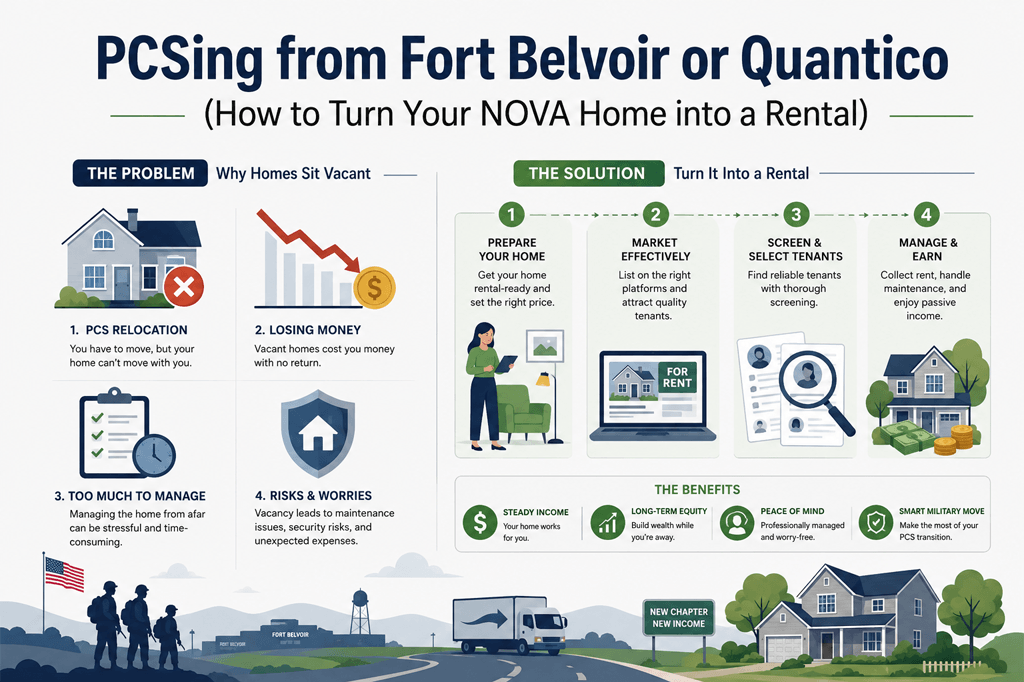
For many service members and military families, converting a home into a rental property can create a valuable long-term asset while generating monthly income. Northern Virginia continues to attract renters because of its strong job market, proximity to Washington, D.C., and steady demand for housing. Communities near Fort Belvoir, Quantico, Alexandria, Springfield, Fairfax, and Woodbridge often remain attractive to both military and civilian renters.
Before handing over the keys to a tenant, however, there are several important steps that can help protect your property and position your rental for success.
Start by Evaluating the Local Rental Market
Just because a home can be rented doesn’t automatically mean it should be. Before making any decisions, research the rental market in your specific neighborhood. Rental rates can vary significantly between communities, even when they’re only a few miles apart.
Look at factors such as:
- Average monthly rent for similar homes
- Vacancy rates in the area
- Demand from military families
- Nearby employers and transportation options
- School districts and community amenities
Understanding local market conditions helps determine whether renting your home will support your financial goals. It also prevents the common mistake of setting rental rates based solely on mortgage payments rather than market demand.
A realistic pricing strategy is often one of the most important factors in attracting qualified tenants and reducing vacancy periods.
Review Your Financial Position
Many military homeowners assume that rental income will automatically cover every expense associated with the property. In reality, successful landlords plan for more than just the mortgage payment.
Before converting your home into a rental, calculate potential costs including:
- Mortgage payments
- Property taxes
- Homeowners insurance
- Maintenance and repairs
- HOA fees
- Vacancy periods
- Property management fees
- Emergency expenses
Creating a detailed budget provides a clearer picture of what ownership will look like after your PCS move.
The goal isn’t simply to generate rental income. It’s to ensure the property remains financially sustainable over the long term.
Prepare the Home for Tenant Occupancy
A home that worked well for your family may need adjustments before it’s ready for renters.
Take time to view the property through a tenant’s perspective. Ask yourself:
- Are there any deferred maintenance issues?
- Do appliances function properly?
- Are smoke and carbon monoxide detectors operational?
- Does the property present well during showings?
- Are there safety concerns that need attention?
Small repairs completed before listing the property can prevent larger issues later. Fresh paint, professional cleaning, landscaping improvements, and minor maintenance updates often make a significant difference in tenant interest.
Properties that are clean, functional, and move-in ready tend to attract stronger applicants and command better rental rates.
Understand Landlord Responsibilities Before You Leave
Owning a rental property comes with legal and operational responsibilities that continue long after your PCS move is complete.
As a landlord, you may be responsible for:
- Maintaining habitable living conditions
- Addressing repair requests
- Following state and local housing regulations
- Managing lease agreements
- Handling security deposits properly
- Responding to tenant concerns
Virginia landlord-tenant requirements differ from what many first-time landlords expect. Taking time to understand your obligations before relocating can help avoid misunderstandings and legal complications later.
For military homeowners who have never managed a rental property before, this step is often overlooked until problems arise.
Create a Tenant Selection Process
The quality of your tenant can have a major impact on your experience as a landlord. A thorough screening process helps reduce risk while increasing the likelihood of a successful tenancy.
Evaluate applicants based on:
- Income stability
- Employment verification
- Credit history
- Previous rental experience
- References
- Background screening results
Reliable tenants often contribute to fewer maintenance issues, more consistent rent payments, and a smoother overall rental experience.
Investing time upfront in tenant selection can save significant time and money in the future.
Decide How You’ll Handle Maintenance Requests
One of the most challenging aspects of long-distance property ownership is maintenance coordination.
A leaking pipe or broken HVAC system doesn’t become less urgent simply because you’re stationed in another state or overseas.
Before moving, establish a plan for handling:
- Emergency repairs
- Routine maintenance
- Vendor communication
- Service scheduling
- Property inspections
Many military homeowners find that maintenance management becomes increasingly difficult once they are no longer local. Having trusted contractors and service providers already identified can make responding to issues much easier when problems arise.
Protect Yourself with a Strong Lease Agreement
A lease serves as the foundation of the landlord-tenant relationship. A well-written lease helps establish expectations while protecting both parties throughout the tenancy.
Important topics often addressed include:
- Rent payment terms
- Late fee policies
- Maintenance responsibilities
- Occupancy limits
- Pet policies
- Lease renewal procedures
- Property access guidelines
Clear lease terms can help reduce disputes and provide guidance when questions arise during the rental period.
Whenever possible, landlords should ensure lease documents comply with applicable Virginia laws and regulations.
Keep Detailed Records from Day One
Good documentation is essential for rental property owners, especially those managing homes from a distance.
Maintain organized records related to:
- Lease agreements
- Property inspections
- Maintenance invoices
- Rent payments
- Security deposits
- Tenant communications
Digital recordkeeping systems can simplify organization and provide easy access when information is needed. Documentation becomes particularly valuable if disputes occur or if questions arise regarding repairs, payments, or lease terms.
Consider Whether Self-Management Is Realistic
Many military homeowners initially plan to manage their rental property themselves. In some situations, that works well. In others, distance creates challenges that become difficult to manage over time.
Ask yourself:
- Will I be available to respond to tenant issues?
- Can I coordinate repairs from another state or country?
- Do I have reliable local contacts?
- Am I comfortable navigating landlord responsibilities remotely?
- Will my military duties limit my availability?
The answers often help determine whether self-management remains practical after relocation. For some property owners, the convenience of professional support outweighs the time and stress involved in managing a rental independently.
Why Many Military Homeowners Choose Professional Property Management
Military life is unpredictable. Deployments, training schedules, relocations, and changing assignments can make property management difficult to prioritize.
Professional property management can help simplify ownership by handling many responsibilities that would otherwise fall on the landlord.
These services often include:
- Marketing vacant properties
- Tenant screening
- Rent collection
- Maintenance coordination
- Property inspections
- Lease administration
- Tenant communication
For military families relocating from Fort Belvoir or Quantico, having experienced local professionals oversee the property can provide added confidence and peace of mind.
Final Thoughts
A PCS move doesn’t necessarily mean you have to sell your Northern Virginia home. For many military homeowners, turning a primary residence into a rental property creates an opportunity to build long-term wealth while maintaining ownership in a strong housing market.
Success starts with preparation. Understanding local rental demand, planning financially, selecting qualified tenants, and creating systems for ongoing property oversight can help make the transition smoother.
Whether you’re moving across the country or overseas, taking the right steps before you leave can help position your property for long-term success as a rental investment.
Preparing to turn your Northern Virginia home into a rental? Elevate Realty Solutions helps military homeowners navigate tenant placement, property management, and ongoing rental operations throughout the NOVA region. Contact our team today to learn how we can help protect your investment while you’re away.