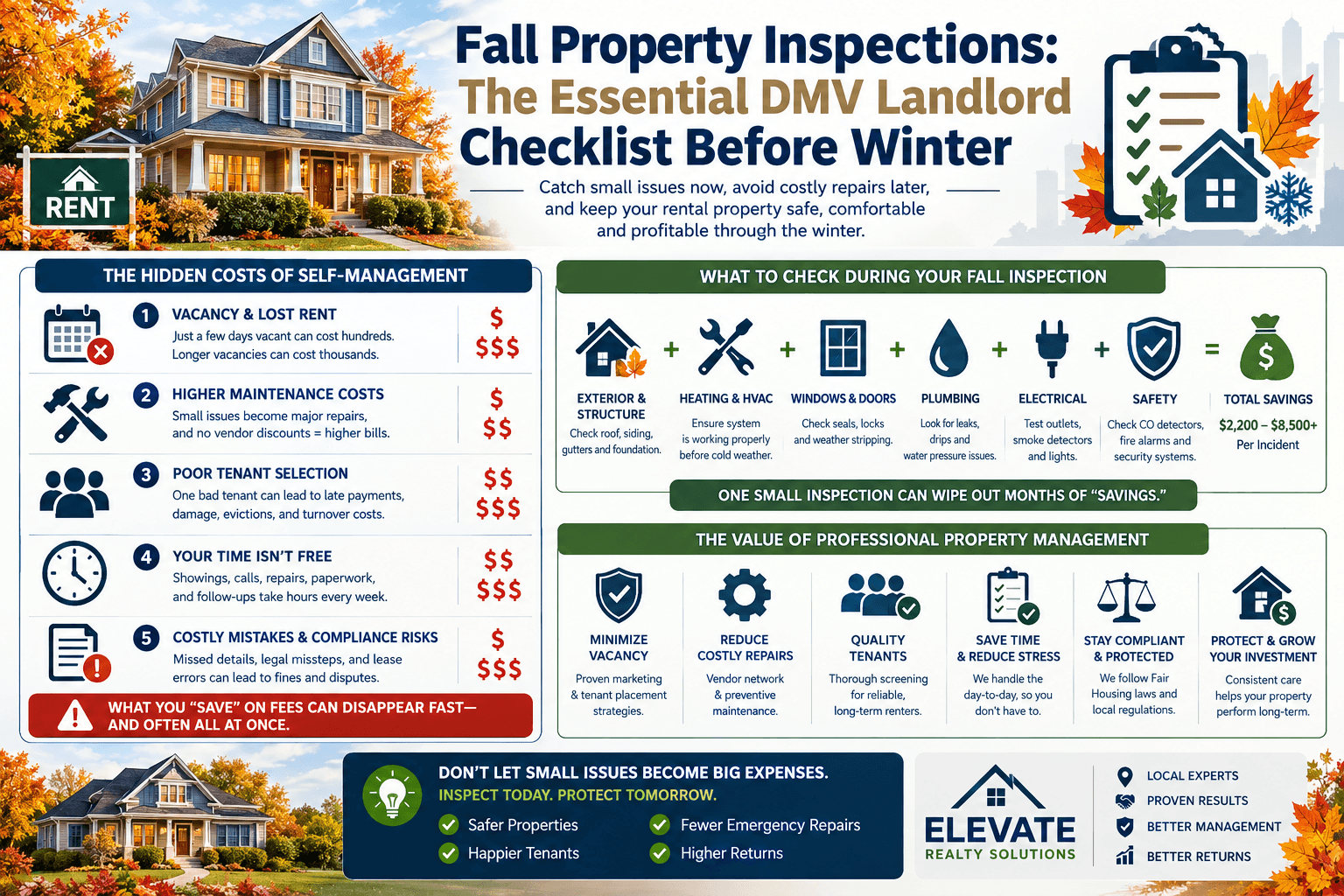
Fall is a good time to look at your rental property with fresh eyes.
The leaves are changing, temperatures are dropping, and winter is getting closer. For a DMV landlord, that makes this one of the most important windows of the year to catch small property problems before they become expensive winter emergencies.
A loose gutter today can contribute to water damage later. A heating system that seems fine on a mild fall day may struggle when temperatures drop. A small plumbing leak can become a much bigger problem when freezing weather arrives.
A fall inspection is not about finding something wrong with every property. It is about identifying the problems that are easier, safer, and less expensive to address before winter puts the property under additional stress.
Here is a practical checklist DMV landlords can use before the first serious cold snap.
Check the Roof, Gutters, and Downspouts
Start at the top.
Look for missing, damaged, or deteriorating shingles and any visible signs that water may be getting into the property. Pay particular attention to ceilings and upper-floor walls for staining that could indicate an existing or past leak.
Then inspect the gutters and downspouts.
Leaves and debris can block normal drainage, causing water to overflow near the roofline or collect around the foundation. Make sure downspouts direct water away from the property rather than allowing it to pool next to the foundation.
The EPA specifically recommends regular gutter maintenance and keeping water from collecting around the foundation.
If you see a roof leak, do not put it on the list of things to deal with “when winter gets here.” Winter is exactly when you want that problem resolved.
Test the Heating System Before You Need It
A tenant discovering that the heat does not work during the first freezing night of the season is a problem no landlord wants.
Before winter, have the property’s heating system inspected and serviced as appropriate. Turn the system on and make sure it is actually heating the property properly. Listen for unusual noises and look for signs that the system is struggling.
For properties with furnaces, boilers, heat pumps, or other heating equipment, professional maintenance may be appropriate depending on the system and its condition.
The Department of Energy includes cleaning, tuning, repairing, or replacing heating and cooling systems among common whole-house weatherization measures.
Also check that smoke and carbon monoxide alarms are working and that required safety equipment is in place. If the property has a fireplace or wood-burning appliance, those systems deserve their own inspection and maintenance as well.
Look for Signs of Water or Moisture
Water problems rarely improve by themselves.
Walk through the property looking for water stains, damp areas, musty odors, peeling paint, condensation, or visible mold. Check around ceilings, windows, bathrooms, kitchens, basements, and other areas where moisture problems commonly show up.
Do not focus only on obvious leaks. Condensation can also signal a moisture problem, particularly during colder weather.
According to the EPA, mold growth is fundamentally a moisture problem. Fixing the water source is critical because simply cleaning visible mold without addressing the underlying moisture can allow the problem to return.
If you find a leak, deal with the source first.
Inspect Windows and Exterior Doors
Cold air coming through a poorly sealed window or door can make a property uncomfortable and force the heating system to work harder.
Check window frames, weatherstripping, door sweeps, caulking, and visible gaps around exterior openings. Look for damaged seals or drafts.
You do not necessarily need to replace every older window. Sometimes a relatively simple repair or weatherization measure can address the immediate problem.
The Department of Energy identifies weatherstripping, air sealing, and repairing or replacing windows and doors as potential weatherization measures.
The key is to distinguish between normal wear and a problem that could affect the property’s comfort, efficiency, or protection from the elements.
Protect Pipes Before Freezing Temperatures Arrive
Frozen pipes can turn into one of the most expensive maintenance problems a landlord faces.
Inspect exposed plumbing, especially pipes located near exterior walls, in crawl spaces, basements, garages, or other areas vulnerable to cold temperatures.
Where appropriate, insulate vulnerable water lines and make sure outdoor faucets are properly shut off and drained before freezing conditions arrive.
The EPA recommends insulating water lines that run along exterior walls and shutting off and draining outdoor spigots before freezing temperatures. It also recommends knowing where the property’s main water shutoff valve is located.
That last point matters. In an emergency, knowing how to shut off the water quickly can limit the amount of damage.
Make sure your tenant knows where the shutoff is too.
Inspect the Basement, Crawl Space, and Foundation
These areas are easy to overlook because tenants may spend little time there.
They should still be part of your fall inspection.
Look for standing water, dampness, cracks, signs of pests, damaged insulation, exposed pipes, and evidence that water is entering the property.
Pay attention to drainage around the exterior as well. Soil should generally direct water away from the foundation rather than toward it.
A small drainage issue can become much more noticeable after heavy rain, snow, or repeated freeze-and-thaw conditions.
Check Exterior Steps, Walkways, and Handrails
Winter safety is not limited to the inside of the property.
Walk around the exterior and inspect steps, porches, decks, walkways, railings, and exterior lighting. Look for loose boards, unstable railings, cracks, uneven surfaces, or other hazards that could become more dangerous in wet, icy, or snowy conditions.
This is also a good time to confirm that outdoor areas are reasonably clear and that anything likely to become a winter maintenance problem has been addressed.
Review Your Preventive Maintenance Records
An inspection should not exist in isolation.
Before you finish, look at the property’s maintenance history.
When was the HVAC system last serviced? Has the roof had previous repairs? Were there plumbing issues last winter? Has a tenant repeatedly reported a draft, leak, or heating problem?
Your maintenance records can tell you where to look more closely.
A property that had a recurring issue last winter deserves more attention in that area this fall.
Give the Tenant a Simple Winter Reminder
Your tenant is often the first person to notice something unusual.
Give them a straightforward way to report problems before they become emergencies. Ask them to report things such as a loss of heat, leaking pipes, water stains, unusual moisture, or windows and doors that are no longer sealing properly.
You can also make sure they know what to do if a pipe bursts or another urgent problem occurs.
Good property management is not just about inspecting the property. It is about creating a system where problems are reported and handled quickly.
The Goal Is Fewer Winter Surprises
A fall inspection does not guarantee that nothing will go wrong during winter. Properties are still exposed to weather, mechanical failures, tenant issues, and unexpected emergencies.
What it does give you is a chance to deal with known problems before they become urgent.
For DMV landlords, that means looking beyond the obvious and checking the systems that matter most when temperatures drop: the roof, drainage, heating, plumbing, windows, moisture, foundation, and exterior safety.
Walk the property. Document what you find. Prioritize genuine risks. Schedule repairs before winter demand makes them harder to address.
And if you manage rental properties from a distance or simply do not have the time to stay on top of every inspection and maintenance issue, having a reliable property management system in place can make the process much easier.
Winter is coming either way.
The goal is to make sure your rental property is ready for it.