The keys are back, the house is empty, and you’re ready to find another tenant.
Then you find a stained carpet, a dirty refrigerator, and a bathroom fan nobody mentioned. The gap between leases suddenly looks busy.
That gap is your rental turnover. How you handle it affects deposit disputes, repair costs, vacancy time, and the next tenancy.
Here’s how to manage it without rushing the wrong decisions.
Before Move-Out: Get the Handoff Straight
Start while the outgoing tenant is still packing.
Confirm the agreed surrender date, arrange the return of keys, fobs, and parking passes, and request a forwarding address. Explain the inspection process and any cleaning and removal obligations under the lease.
Check local inspection requirements before setting a date. Tenants may have the right to attend.
Keep the necessary utilities active. Contractors need service to test appliances, HVAC, and plumbing.
The First Walkthrough: Document Before You Touch Anything
The first visit should be an inspection, not a cleaning session.
Bring the original move-in report, if available. Photograph each room and take close-ups of anything unusual. Test appliances and fixtures; check under sinks, doors, windows, and signs of leaks or pests.
Record the practical details, too:
- Keys and access devices returned or missing
- Meter readings, where relevant
- Items left behind
- Cleaning or repair issues, with dated photos
- Problems requiring an electrician, plumber, or other specialist
If belongings remain, don’t assume you can throw them away immediately. Abandoned-property rules and the circumstances of possession matter. Confirm the legal process before disposal.
Your inspection notes serve two purposes: they support fair deposit accounting and give contractors a clear scope of work.
A Scratch Isn’t the Same as Damage
This is where many turnovers become unnecessarily contentious.
Faded paint, minor scuffs, and carpet wear from ordinary use are different from a broken door, large holes in drywall, or a pet-stained floor. The issue isn’t whether everything looks new. It’s whether deterioration exceeds ordinary wear and tear.
Compare move-in and move-out evidence. Consider the age and previous condition of the item. Get reasonable repair estimates or actual invoices rather than assigning arbitrary charges.
And keep two budgets separate. A tenant may be responsible for qualifying damage; the owner remains responsible for normal upkeep and discretionary upgrades. Deciding to replace dated countertops does not make that renovation a tenant charge.
The Deposit Clock Is Already Running
Virginia, Maryland, and D.C. have different move-out procedures. Don’t treat a general “45-day rule” as the whole story.
Virginia: Under Virginia Code § 55.1-1226, landlords generally have 45 days after tenancy ends or the tenant vacates, whichever is later, to provide an itemized accounting and any refund due. If the tenant requests to attend the move-out inspection in writing, specific notice and inspection requirements apply.
Maryland: Real Property § 8-203 generally requires deposit return and an accounting of lawful deductions within 45 days after the tenancy ends. Maryland also gives qualifying tenants a right to attend an inspection, with advance certified-mail notice and a defined inspection window.
Washington, D.C.: Under District security-deposit regulations, an owner generally has 45 days to refund the deposit with applicable interest or give the required withholding notice. When withholding is claimed, a further 30-day deadline applies to the itemized statement and remaining refund. Additional notice rules may apply to unpaid amounts.
Keep dated proof of every notice. Contractors don’t stop these clocks.
Make Repairs in the Right Order, Not the Most Visible Order
Once the property is documented, separate the work into three categories.
First, safety and function. Address active leaks, electrical hazards, broken locks, heating or cooling problems, and anything that makes the home unsafe or unsuitable for occupancy.
Next, lease-ready condition. Schedule cleaning, pest treatment where needed, paint touch-ups, appliance servicing, and repairs that will affect everyday living.
Finally, optional improvements. New light fixtures or upgraded finishes might help, but don’t let an unplanned cosmetic project hold up essential work. Review the likely benefit against the extra vacancy it creates.
Older DMV housing deserves special attention. If a rental was built before 1978, work disturbing painted surfaces can trigger EPA lead-safe renovation requirements. Confirm the contractor has the required certification before work begins.
Schedule trades in a sensible sequence. Repairing drywall after the painters finish, or cleaning before dusty work begins, means paying twice.
When Should the Property Go Back on the Market?
You don’t always need to wait until the final cleaning to prepare the listing. While repairs are underway, review comparable rentals, draft the listing, and plan photographs.
But don’t promise an availability date you can’t defend.
If the flooring contractor hasn’t confirmed a completion date, leave room for inspections, cleaning, final checks, and unexpected repairs. Prospective tenants should know which improvements are pending, and photographs should represent the home’s condition accurately.
Once it is ready to show, move quickly on inquiries and scheduling. A house that’s repaired but poorly marketed is still a vacant house.
Know What This Turnover Actually Cost
Keep a record beyond the contractor invoices.
Include cleaning, repairs, advertising, utilities, leasing costs, and lost rent. Separate routine owner maintenance from tenant-caused damage and from improvements that may have longer-term value.
That record becomes useful next time. If the same carpet needs replacing after every tenancy, the flooring choice may be the issue. If vacancies repeatedly stretch because vendors aren’t booked promptly, the scheduling process needs attention.
Track the causes, not just the total.
One Final Walk, Then a New Starting Point
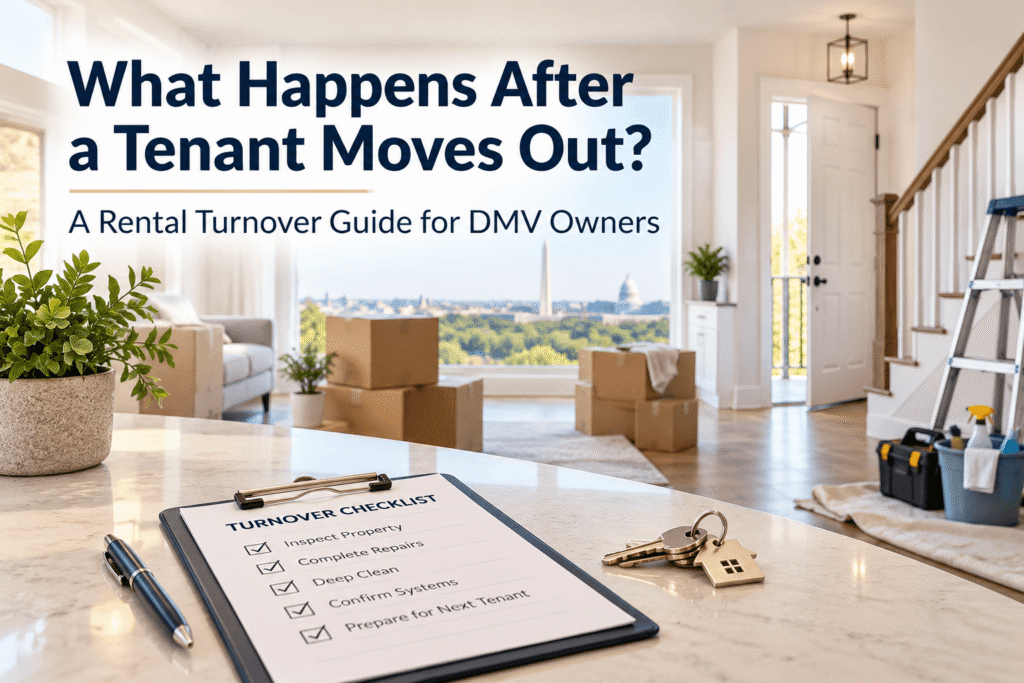
Before the next tenant receives keys, test the repairs, confirm the property is clean, replace or account for access devices, check safety equipment, and take fresh condition photos. Complete any required local inspections or approvals.
Provide the new tenant with a documented move-in condition report and clear instructions for maintenance requests. Preserve the file from the previous tenancy separately.
A successful turnover isn’t simply a fast one. It closes the old lease properly and starts the next one without inherited problems.
For DMV owners managing repairs, deposit paperwork, contractors, and leasing at once, Elevate Realty Solutions’ landlord services can help coordinate the work between tenancies. The aim is straightforward: fewer preventable delays, a rental that’s ready to live in, and a cleaner handoff for everyone involved.