Thanksgiving week is a bad time to discover that the upstairs bedrooms barely get warm. By then, service appointments are harder to arrange, tenants may be traveling, and an overnight freeze can turn a small plumbing oversight into an urgent repair.
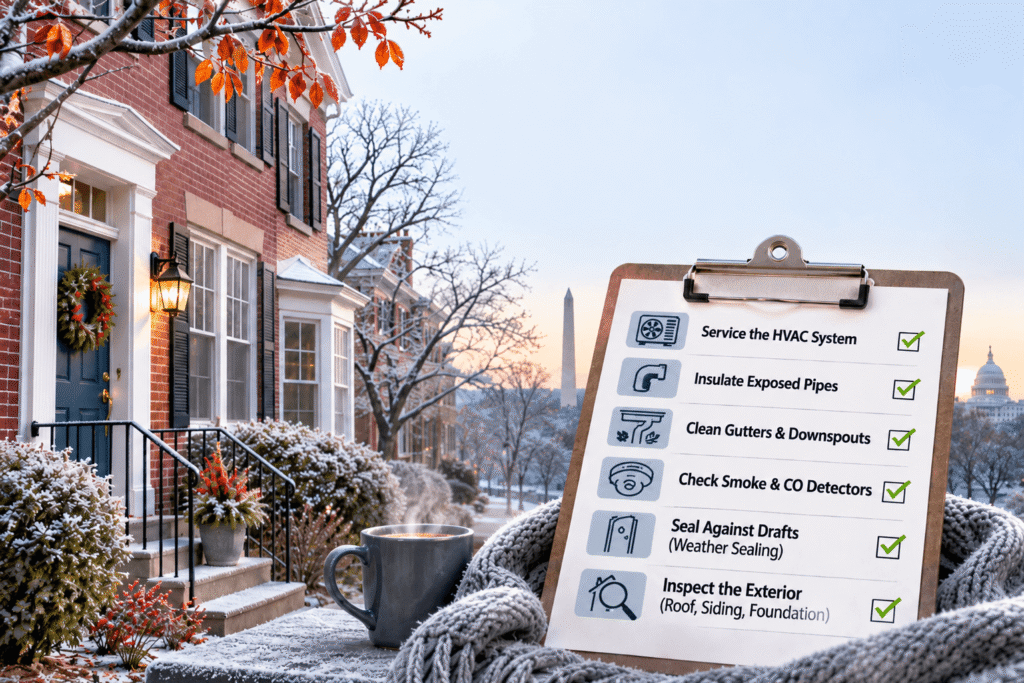
For a DMV rental, November maintenance is less about inspecting everything again and more about closing the jobs that cannot wait for December. Here’s a working checklist for owners who want the property ready before winter weather sets the schedule.
Put the November Work Orders in the Right Order
Not every item deserves the same deadline. Sort outstanding maintenance into three groups before calling contractors.
| Priority | November action | Why it comes first |
|---|---|---|
| Fix immediately | Heating failures, active leaks, unsafe steps or exposed, vulnerable water lines | These can affect habitability or cause damage even before a major storm. |
| Book this month | Furnace service, final gutter clearing, exterior sealing, chimney work where applicable | Access and contractor availability become less predictable around the holidays. |
| Arrange before snowfall | Snow removal, deicing supplies, after-hours contacts and tenant instructions | These need an assigned person, not a last-minute phone call. |
Start with anything tenants have already reported. An old maintenance request for a cold bedroom deserves more attention than an optional improvement to the landscaping.
Confirm the Heat Works Throughout the Home
A contractor’s appointment on the calendar is not the same as a completed heating check.
Ask the technician to test the equipment under heating demand, inspect components appropriate to the system, and flag any repair that could interrupt service during cold weather. Replace or clean filters as recommended and make sure return vents are unobstructed. If the rental uses a heat pump, have the technician check that its heating and auxiliary functions operate correctly.
Then get feedback from the occupant. Does the thermostat reach the selected temperature? Are the bedrooms heating evenly? Is a particular floor noticeably colder? Problems that only show up in occupied rooms can escape a quick equipment-room visit.
Local requirements matter. D.C.’s Department of Buildings says heating equipment must maintain at least 68°F in habitable rooms and bathrooms during the October 1 to May 1 heating period. Montgomery County also requires rental heating systems capable of maintaining at least 68°F. Check the requirements for your property’s precise jurisdiction and building type.
While the technician is there, verify that required smoke and carbon monoxide alarms work. Fuel-burning appliances and fireplaces should receive qualified inspection and servicing where appropriate; a tenant should never have to rely on an oven or an unsafe portable heater to compensate for broken heat.
Deal With Freeze-Prone Plumbing Before the First Cold Night
These jobs are easy to miss because most involve parts of the property tenants rarely see:
- Disconnect garden hoses, shut off and drain exterior water lines where the plumbing allows, and protect hose bibs.
- Check water lines in garages, crawl spaces, unheated basements and cabinets against outside walls. Insulate vulnerable sections and address drafts around them.
- Confirm the main water shutoff is accessible, labeled and functional. Give residents clear instructions for reporting a leak, not an expectation that they will make plumbing repairs.
- For irrigation systems, arrange proper winterization if the property has one. A contractor may be needed to avoid damaging components.
Vacant rentals need their own plan. Don’t switch off the heat to save a few dollars if doing so exposes plumbing to freezing. Confirm who will check the home after severe cold or a power outage, especially if the property will remain empty over the holidays.
Use the Last Leaf Drop to Check Where Water Goes
Early autumn gutter cleaning may not be enough for a home surrounded by mature trees. Schedule a final clearing once most leaves have fallen, and have the contractor check that downspouts discharge away from the foundation.
At ground level, look for blocked surface drains, standing water beside basement entrances, or soil settling toward the house. If the rental has a sump pump, test it and check the discharge path before prolonged wet weather arrives.
Treat gaps around doors and windows as repair items when they admit water or substantial drafts. Weatherstripping and targeted sealing may be sufficient; wholesale window replacement isn’t automatically a November necessity. Have a professional investigate suspected roof or flashing failures rather than sending someone onto a wet or frosty roof for a casual inspection.
Decide Who Clears Ice Before There Is Ice
Snow removal is a maintenance responsibility that becomes confusing fast when nobody has been assigned the work. Confirm who clears the public sidewalk, entry steps, parking areas and shared walkways. Check the lease, HOA or condo rules, and the local ordinance; they may not place every obligation on the same person.
For example, D.C. generally requires sidewalk snow and ice removal within the first eight daylight hours after a storm. Arlington County requires adjacent sidewalks to be cleared within 24 hours for snowfall under six inches, or 36 hours for greater amounts. Montgomery County generally requires clearance within 24 hours. Verify the rule that applies to your property’s address.
For a rental with an owner-managed driveway or walkway, arrange a snow contractor now and agree on service triggers, access and billing. Check exterior lighting, handrails and uneven steps before a thin layer of ice hides the problem. Stock suitable deicer where tenants or vendors can reach it.
End November With Two Confirmations
First, send the tenant a short winter notice covering the emergency maintenance number, how to report heating problems or leaks, and any agreed responsibilities for outdoor faucets or snow removal. Give reasonable notice for contractor access as required by local law and the lease. Ask for confirmation of persistent cold spots rather than treating silence as proof that everything works.
Second, close out the maintenance file. Record completed jobs, photographs, invoices, unresolved items and the contractor responsible for each follow-up. If a technician recommends replacing a failing component, decide whether the work must happen before December. A recommendation buried in a service invoice is not a winter plan.
Elevate Realty Solutions coordinates property maintenance and landlord services for owners across Northern Virginia, Maryland and Washington, D.C. For landlords managing from a distance, the value is having someone confirm that these November jobs are actually completed, rather than discovering an open work order during the first hard freeze.