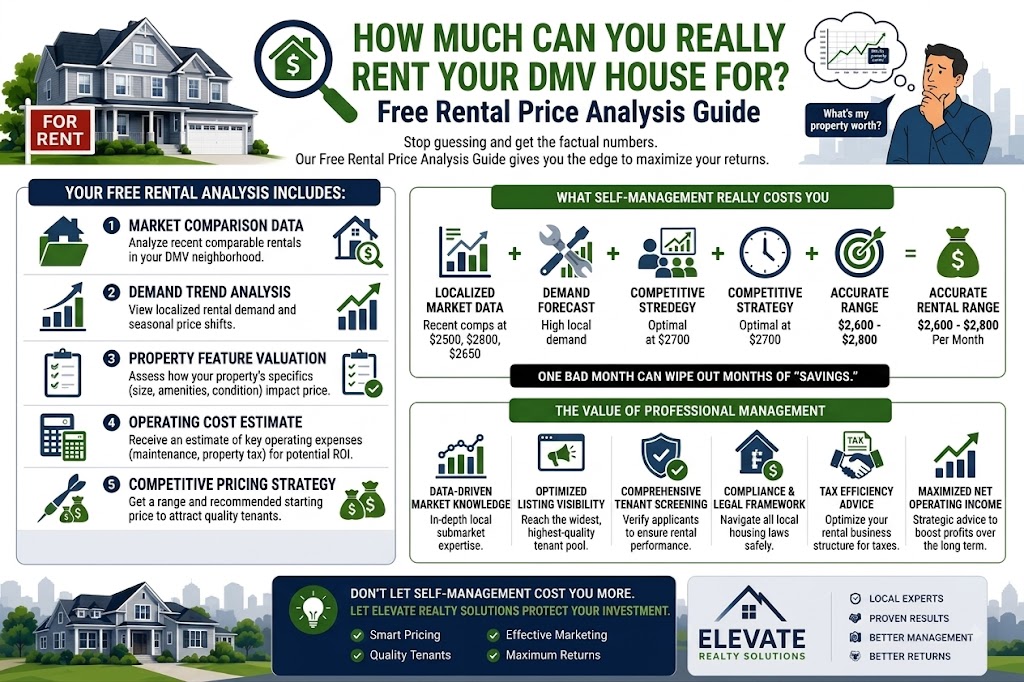
A homeowner in Fairfax can open three rental websites, enter the same address, and come away with three different estimates. Add a neighbor who “gets $3,400,” an old lease from two years ago, and a mortgage payment the owner hopes to cover, and the asking rent can quickly become a number built from opinions rather than market evidence.
If I want to rent out my house, the pricing in the DMV is more local than automated estimates make it appear. A renovated townhouse near Metro, an older detached home ten minutes farther out, and a condo with the same bedroom count may compete for entirely different renters. The right asking rent comes from comparing the property with homes renters can actually choose today, then adjusting for condition, location, timing, and market response.
Start With a Rent Range, Not a Wish Number
Owners often begin with a target: “I want $3,200,” or “I need at least $2,900 to cover my payment.” Neither figure tells us what a renter will pay.
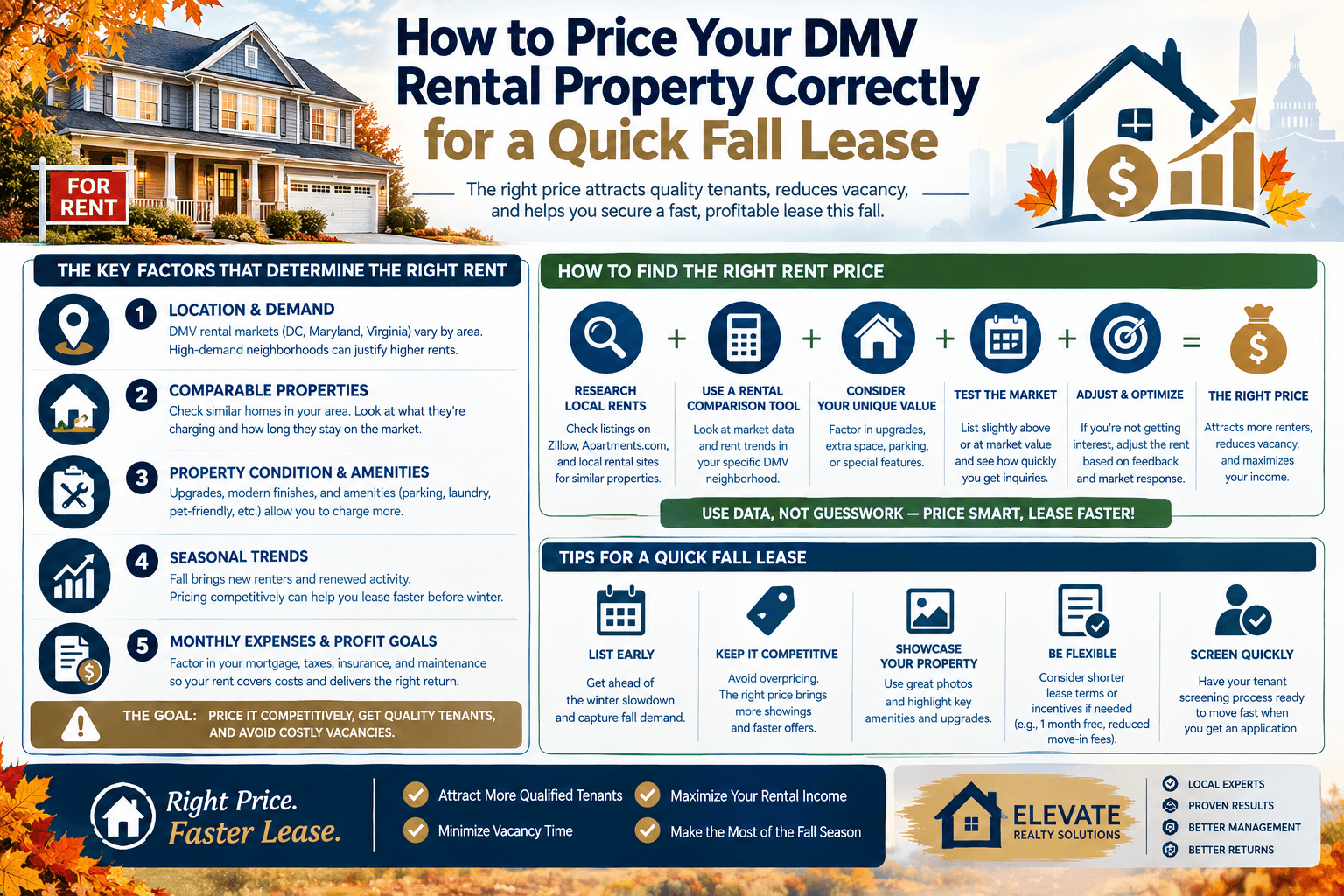
A rental analysis works in the opposite direction. Begin with comparable listings, identify the price band where similar homes are competing, then decide where the property belongs inside the band. Mortgage cost, purchase price, and renovation spending matter to the owner, but renters compare monthly rent, condition, commute, layout, parking, amenities, pet policy, and nearby alternatives.
Build a Comparable Set a Renter Would Recognize
The fastest way to distort a rental estimate is to compare properties that only look similar on paper.
A four-bedroom home should not automatically be compared with every four-bedroom rental in the ZIP code. Start tighter. Look for homes in the same neighborhood or immediate submarket with a similar property type, bedroom and bathroom count, square footage, parking setup, and overall condition. School boundaries, Metro access, commuter routes, outdoor space, and whether the home is detached, attached, or a condo can move rent within a short distance.
Use three kinds of evidence. Active listings show what renters can choose now, but only reveal asking prices. Recently leased comparables give a better indication of where deals are closing. Days on market and price changes show how renters responded. A listing at $3,300 carries less weight if it has been available for six weeks and already dropped twice.
The goal is not one perfect comparable. A small group of credible matches usually tells a clearer story.
Adjust for the Features Renters Actually Compare
Once the comparable set makes sense, look at the property through a tenant’s eyes. Two townhouses on neighboring streets can deserve different rents even with nearly identical square footage.
One may have updated bathrooms, fresh flooring, a fenced yard, and two assigned parking spaces. The other may have dated finishes, worn carpet, and limited parking. Matching the rent simply because both have three bedrooms ignores how renters choose between homes.
Comparison Checklist
| Area | Questions to Ask |
|---|---|
| Condition | How do the kitchen, bathrooms, flooring, paint, and fixtures compare? |
| Layout | Does the floor plan work for bedrooms, storage, and home-office needs? |
| Parking | Garage, driveway, assigned spaces, street restrictions, EV charging? |
| Outdoor space | Yard, patio, balcony, fencing, maintenance responsibility? |
| Location | Metro access, commute routes, schools, shopping, walkability? |
| Policies | Pets, utilities, HOA restrictions, lease terms? |
Renovation cost and rental value are not the same thing. Spending $20,000 on a project does not automatically add a matching premium to the monthly rent. Improvements matter when renters value them more than competing options.
Let the First Week Challenge Your Assumptions
Pricing does not end when the listing is published. Early market response often reveals what a spreadsheet cannot.
Inquiries, showing requests, applications, and renter feedback tell you whether the price is landing. Frequent qualified inquiries suggest one picture. Plenty of listing views with few showing requests suggest another. Showings without applications may point to price, presentation, condition, or a feature renters dislike once they arrive.
Owners sometimes protect an asking price for too long because a reduction feels like lost money. Vacancy can cost more.
Suppose a home is listed at $3,200 while renter response points closer to $3,050. Holding out for the extra $150 only works if the delay does not consume the gain. One month of vacancy at $3,200 would take more than 21 months of collecting an extra $150 to recover.
Rental pricing is a revenue decision, not a contest to achieve the highest advertised number.
Where Online Rent Estimates Fall Short
Online valuation tools can help establish a rough range and surface nearby rental activity. They cannot walk through the home, notice dated carpet, appreciate an unusually large yard, judge a difficult parking setup, or compare the property with homes renters toured earlier in the week.
DMV pricing also depends heavily on micro-location. Commute patterns, school boundaries, Metro access, military installations, neighborhood character, and property type can separate two rentals only a few miles apart.
Use automated estimates for orientation. Make the final decision from local comparables and current competition.
Your Free Rental Price Analysis Checklist
Before choosing a list price, collect five to eight close comparables. Separate active listings from recently leased homes, remove obvious outliers, note days on market and price reductions, then compare condition, parking, outdoor space, location, amenities, and lease terms.
Afterward, ask a simple question: if a qualified renter toured your property and the three closest competing homes on the same day, which one would they choose at the prices currently advertised?
The answer often exposes an overpriced listing faster than another online calculator.
Get a Free Rental Price Analysis for Your DMV Property
To find tenants for my property, a well-calibrated asking rent can attract qualified interest without leaving avoidable income on the table. Elevate Realty Solutions can review your property against current local competition and help determine a realistic rental range before the listing goes live.
Planning to rent your home soon? Speak with Elevate before choosing the asking price so the marketing strategy begins with current market evidence.