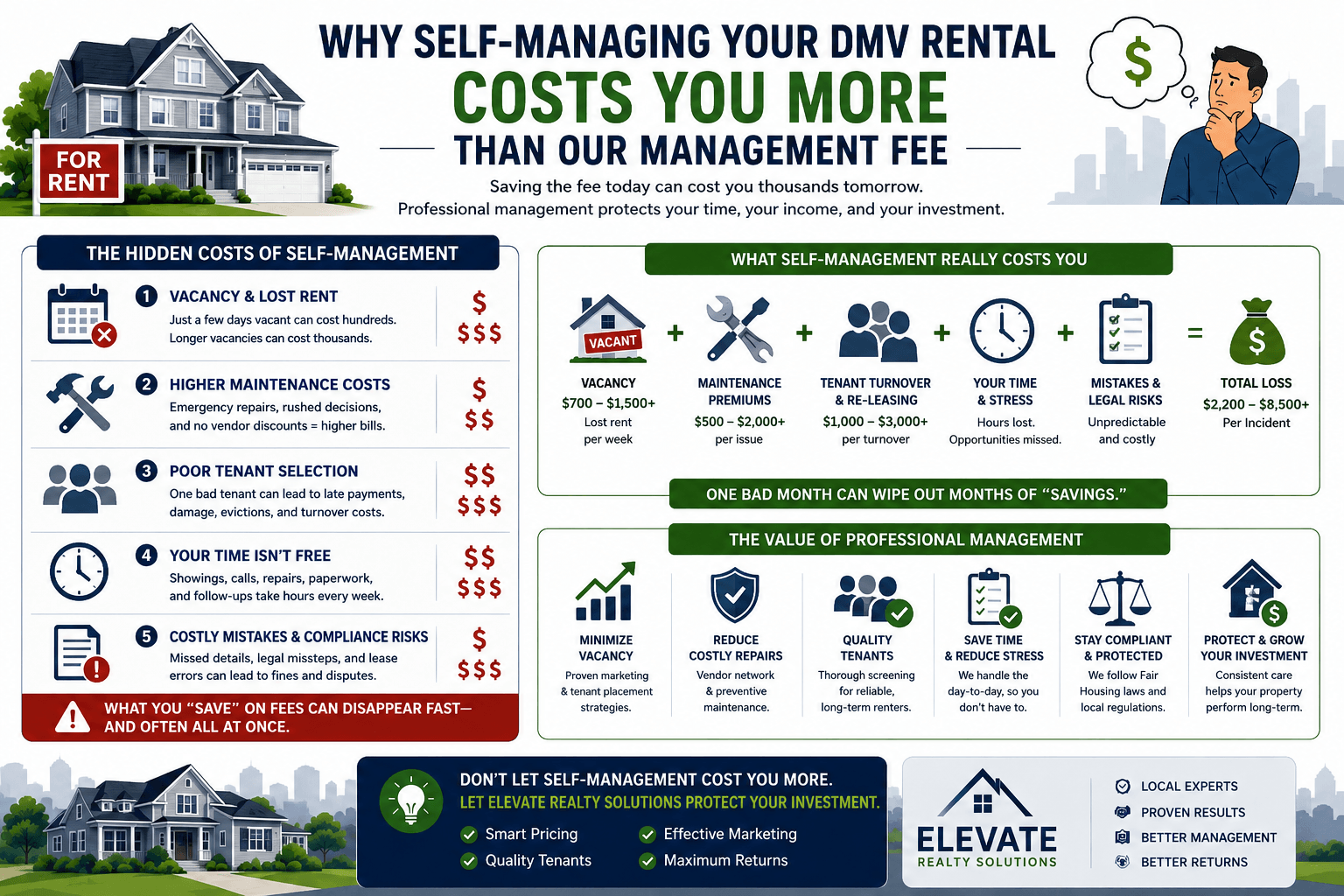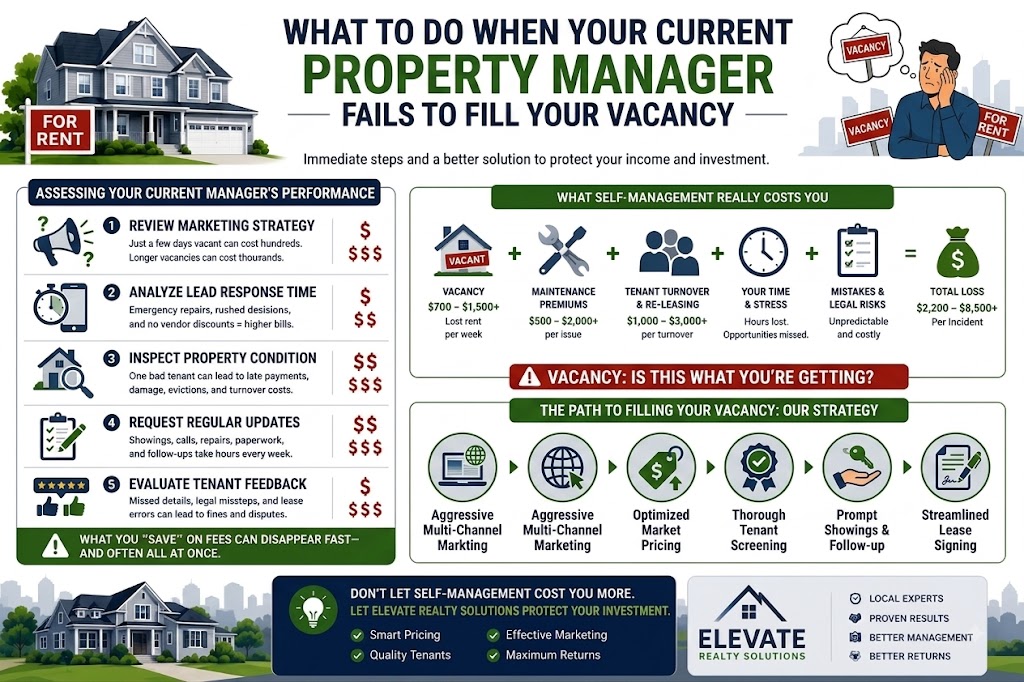

Saving the management fee sounds sensible until the rental starts taking pieces of your calendar, your evenings, and eventually your return.
A landlord may look at a monthly management charge and think, “I can handle a few emails and maintenance calls myself.” For some owners, maybe. Problems begin when “a few emails” turns into application screening, vendor scheduling, lease questions, late-night repair calls, renewal decisions, move-out inspections, unpaid balances, and a vacancy dragging into another week.
The expense rarely arrives in one dramatic moment.
It leaks out gradually.
A few days without a tenant. A contractor charging more because the repair became urgent. A showing inquiry answered six hours too late. A renewal sent after the tenant already started looking elsewhere. Three hours spent comparing plumbers on a workday. Another Saturday lost to coordinating access.
None of those items appear on a property management invoice.
They still cost money.
Self-Management Is Only Cheap When Nothing Goes Wrong
Rental ownership often feels easy during quiet months.
The tenant pays. No maintenance request comes in. No lease deadline approaches. No neighbor complains. The owner opens the bank account, sees rent deposited, and wonders why anyone pays a property manager.
Then the water heater fails.
Or the tenant announces a move-out.
Or the property sits vacant longer than expected.
Or an applicant looks promising until the screening details start raising questions.
Owning a rental in the DMV means managing dozens of small decisions throughout the year. Most are not difficult individually. The financial damage comes from delays, inconsistency, missed details, or rushed judgment.
A management fee is predictable.
Operational mistakes are not.
Vacancy Can Erase Months of Savings
Consider a Northern Virginia rental listed at $3,000 per month.
Every vacant day costs roughly $100 in lost rent.
Seven empty days: about $700.
Fourteen empty days: about $1,400.
An owner can spend months avoiding management fees, then lose the entire savings during one slow turnover.
Vacancy also creates pressure. After several weeks without a tenant, owners become more likely to negotiate against themselves, lower screening standards, accept weaker lease terms, or rush an application because another empty month feels unbearable.
Rental pricing requires discipline.
The highest advertised rent is not always the most profitable rent. A property priced slightly above what qualified renters are willing to pay can sit long enough to make the extra monthly income meaningless.
Owners sometimes focus on winning another $100 per month while losing $1,500 waiting for someone to pay it.
Professional management looks at the entire income picture, not only the number on the listing.
Your Time Belongs in the Calculation
Most self-managing landlords never assign a dollar value to their own time.
Try it once.
Count the hours spent answering inquiries, arranging showings, reviewing applications, calling contractors, following up on repairs, answering tenant questions, tracking payments, preparing renewals, organizing documents, and handling turnover.
Then attach an hourly value.
Even a modest estimate can change the economics quickly.
A landlord working full time may spend part of a Tuesday afternoon trying to find an HVAC contractor with same-day availability. A remote owner may coordinate a repair across three phone calls while attending meetings. A military homeowner transferred away from Northern Virginia may be managing a property from another state or time zone.
No management fee appears on the spreadsheet.
The owner is still paying with time.
Maintenance Is More Expensive When Every Call Starts Cold
A leaking pipe does not care whether the owner has a busy week.
Neither does a broken furnace in January.
Self-managing owners often deal with contractors reactively. Something breaks, the search begins, calls go unanswered, quotes vary wildly, and the owner has very little leverage because the tenant needs an answer quickly.
Urgency changes buying behavior.
People compare less.
They approve faster.
They pay whatever solves the problem.
A professional property management services operation already dealing with repairs, vendors, scheduling, access, follow-up, and documentation approaches maintenance differently. The owner remains involved where approval matters, but does not have to rebuild the entire process every time a garbage disposal stops working.
One avoided emergency premium can cover a meaningful portion of annual management expense.
Tenant Selection Carries More Financial Weight Than Most Owners Expect
Many landlord problems begin before the lease is signed.
An owner staring at an empty property naturally wants someone in it.
A friendly applicant tours the home. The conversation goes well. Move-in timing is perfect. The applicant explains a credit issue convincingly.
Emotion enters the decision.
Screening needs distance.
Income, credit history, rental history, payment patterns, background information, and qualification standards need consistent review. The goal is not finding someone who wants the property. Plenty of people may want it.
The goal is selecting a tenant who fits the established rental criteria and is likely to perform under the lease.
A bad tenancy can become far more expensive than a year of management fees.
Late payments are only one concern. Property damage, repeated violations, premature move-outs, conflict, collection problems, and extended turnover can all affect the owner’s return.
Saving money on management loses its appeal quickly when tenant selection goes wrong.
Small Delays Become Expensive Faster Than Owners Realize
Rental management services is often a timing business.
A maintenance request unanswered for two days can become a frustrated tenant.
A renewal conversation started too late can become an unexpected vacancy.
A prospect waiting too long for a showing response can become another landlord’s tenant.
A minor leak left unresolved can become drywall, flooring, paint, and mold remediation.
The financial difference between professional property management services and self-management often comes down to response speed and process.
Not expertise in some abstract sense.
Not fancy software.
Not industry jargon.
Simply having someone responsible for moving the issue forward before a small problem gets larger.
DMV Rentals Add Another Layer of Complexity
The Washington metropolitan area is not one rental market.
A townhouse in Fairfax County operates in a different local environment from a condo in Arlington, a rowhome in Washington, D.C., or a property in Montgomery County.
Tenant expectations vary.
Rental demand varies.
Pricing varies.
Procedures and owner obligations vary.
Owners managing one or two properties may only encounter certain situations every few years. A manager handling rentals every day sees the same categories of problems repeatedly.
Repetition matters.
Experience matters most when a decision needs to be made quickly and the owner does not have time to research from scratch.
Stop Comparing a Management Fee With Zero
Zero is not the cost of self-management.
The real comparison includes vacancy, personal time, maintenance coordination, tenant screening, turnover, administrative work, missed inquiries, delayed decisions, and avoidable mistakes.
Some landlords genuinely enjoy managing their rentals. They have established systems, local contractor relationships, flexible schedules, and enough experience to handle problems efficiently.
For everyone else, self-management can become one of those expenses that never appears as a single charge because the money disappears in smaller pieces.
A management fee is visible.
Lost rent is visible only after the month ends.
Lost time rarely gets measured at all.
And preventable mistakes usually become obvious only after they become expensive.
Rental property should create income and build long-term value.
It should not quietly turn the owner into an unpaid property manager.
See what professional property management could look like for your DMV rental. Talk with Elevate Realty Solutions about your property, current workload, and management needs.