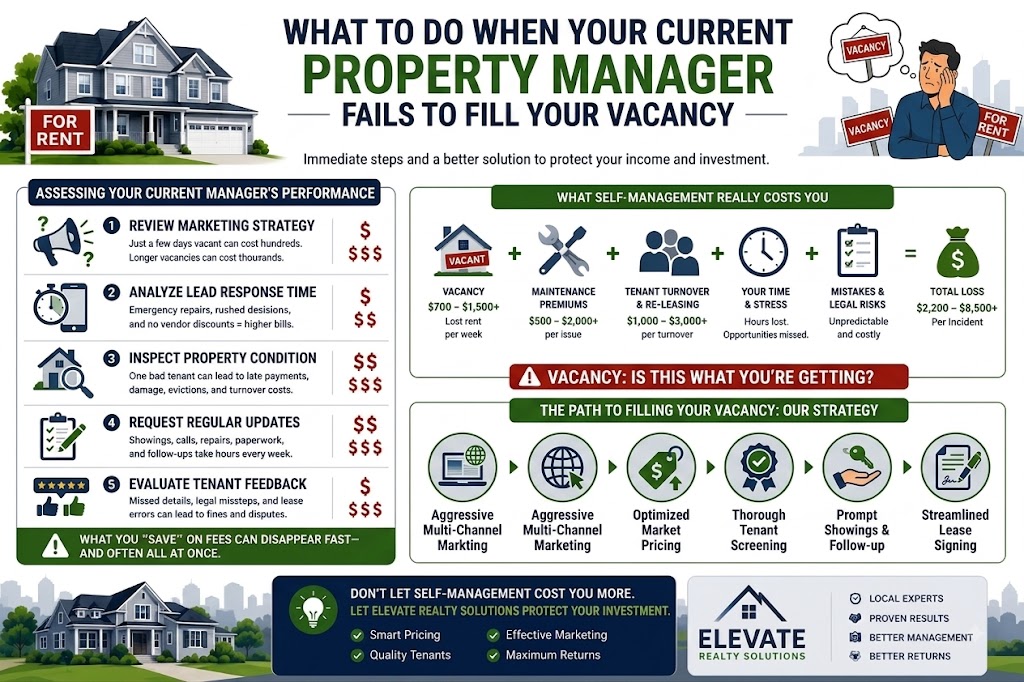
A rental sitting empty for a few days is normal.
A rental sitting empty for weeks while the owner keeps hearing, “We’re getting some interest,” is a management problem until proven otherwise.
Vacancy is expensive because the carrying costs never stop. Mortgage payments, insurance, utilities, HOA dues, taxes, lawn care, and maintenance continue while rent disappears. Yet many landlords wait far too long before challenging the lease management Services because they assume the market simply needs more time.
Sometimes it does.
More often, a stagnant listing is leaving clues. The price may be off. The photos may be weak. Prospects may be waiting too long for replies. Showing availability may be too narrow. The property may look worse in person than it does online. Or the manager may be running the same leasing routine they use for every home, regardless of what the market is telling them.
Before firing the manager or cutting the rent again, find out which part of the process is failing.
First, Stop Asking, “Why Hasn’t It Rented?”
Ask better questions.
A manager should be able to tell you exactly what has happened since the property went live. Not impressions. Not vague comments about market conditions. Actual leasing activity.
Request the numbers:
- Listing views and inquiries
- Number of scheduled showings
- Number of completed showings
- Applications received
- Applications declined or withdrawn
- Prospect feedback
- Price adjustments already made
- Comparable rentals that leased during the same period
Those numbers narrow the problem quickly.
A listing getting very few views may have a visibility or pricing issue. Plenty of views with almost no inquiries usually means renters are seeing the property and deciding it is not worth contacting. Multiple showings without applications points somewhere else entirely.
You cannot fix a vacancy until you know where renters are dropping out.
Run a 72-Hour Vacancy Audit
Give yourself three days to review the property as if you were a renter encountering it for the first time.
Day 1: Compare the Listing Against the Competition
Open the major rental platforms and search within the same neighborhood or immediate submarket.
Do not compare your property with homes you wish were comparable. Compare it with the rentals a prospect could realistically choose instead.
Look closely at price, condition, photography, parking, pet terms, square footage, outdoor space, commute access, and move-in timing.
If your Fairfax townhouse is listed at $3,250 while two similar homes nearby are offered at $3,050 and $3,100, the market does not care what the mortgage costs or what the property rented for two years ago.
Renters compare options available now.
Day 2: Inspect the Marketing
Most owners rarely look at their own listing after approving it.
Do it.
Read the headline. Scan the first five photos. Check the property description. Look at how the amenities are presented. Confirm the rent, deposit, availability date, pet policy, parking information, and contact details.
Then ask one blunt question:
Would you click on it if you had no emotional attachment to the property?
Dark photos, empty descriptions, outdated details, poor image order, missing information, or bland copy can sink an otherwise marketable home.
Day 3: Test the Leasing Process
Send an inquiry from a personal email address or ask someone you trust to do it.
How long does the response take?
Is scheduling simple?
Does someone follow up?
Can a prospect tour outside a narrow weekday window?
Rental shoppers often inquire about several homes in one sitting. A manager replying the next afternoon may already be too late.
Speed matters more than many owners realize.
Do Not Cut the Rent Until You Know What the Rent Is Solving
Price reductions are easy. Diagnosis takes more work.
Lowering rent may solve a genuine pricing problem. It will not fix poor photos, limited showings, slow communication, an unattractive pet policy, or a listing buried by weak distribution.
Before agreeing to another reduction with help renting out my house, ask the manager to explain the evidence behind it.
Suppose the home is getting almost no inquiries. A price adjustment may be justified.
Now suppose inquiries are healthy, showings are frequent, but everyone walks away after touring. Price may still be involved, but property condition, layout, odor, cleanliness, noise, parking, or presentation deserve attention first.
The question is not, “Should we lower the rent?”
The question is, “What renter behavior suggests the price is the problem?”
Watch What Happens After Each Showing
Post-showing feedback is one of the most valuable sources of leasing intelligence, yet many owners never see it.
One comment means little. Patterns matter.
If several prospects mention the same concern, pay attention.
Common Patterns Worth Acting On
“Nice home, but expensive for the area.”
Revisit the comparable set.
“We liked another property more.”
Find out what the competing property offered.
“The home felt smaller than expected.”
Photography or listing language may be creating the wrong expectation.
“Parking is difficult.”
The listing needs to address parking clearly before the showing.
“The place looks dated.”
Cosmetic updates may produce a better return than another rent reduction.
A manager collecting feedback but doing nothing with it is only gathering trivia.
Give the Manager a Recovery Window, Not Unlimited Time
Once the weak point is identified, agree on a specific correction and a review date.
For example:
- New photographs go live Monday.
- The rent changes Tuesday.
- Showing hours expand immediately.
- Follow-up begins after every tour.
- Performance gets reviewed seven days later.
A recovery plan needs a clock.
Owners often lose another month because each adjustment becomes the beginning of a fresh waiting period. One week becomes two. Then another small change is made. Then another week passes.
Vacancy drift is expensive because no single day feels urgent.
Collectively, those days can erase a large portion of annual cash flow.
When Should You Consider Replacing the Manager?
A vacant property alone is not enough reason.
A manager can execute well and still face a slower leasing period. Seasonality, inventory, property condition, unusual floor plans, local demand, and owner pricing expectations all influence lease-up time.
The relationship becomes harder to defend when the manager cannot explain what is happening.
Consider a change when you repeatedly see:
- Little or no reporting
- Slow responses to owner questions
- No showing feedback
- Recycled marketing with no adjustments
- Recommendations based on opinion rather than activity
- Long delays between inquiries and responses
- No clear plan after several weeks of vacancy
Management should create accountability. If the owner has to chase the manager for every update, the arrangement has started working backward.
If You Switch Managers, Do Not Simply Relist the Same Property
A new logo on the same stale listing will not solve much.
The incoming manager should reassess the rental from the ground up.
Pricing deserves a fresh comp review. Photography may need replacement. Listing copy may need rewriting. Showing access should be reconsidered. Prospect feedback from the prior campaign should be reviewed. Any maintenance or cosmetic issue affecting demand should be addressed before the property returns to market.
The relaunch should feel new to renters, not merely reassigned behind the scenes.
Final Thoughts
A lingering vacancy rarely improves because everyone agrees to wait longer.
Owners need information, a diagnosis, a corrective plan, and a deadline for judging whether the plan worked. Market conditions matter, but “the market” should never become a catch-all excuse for poor execution.
A capable property manager should be able to explain what renters are doing, what competing homes are offering, what needs to change, and what result they expect from the next move.
If those answers never arrive, the vacancy may no longer be the only problem.
If your DMV rental has been sitting empty without a clear leasing plan, Elevate Realty Solutions can review the pricing, marketing, and market positioning. Contact Elevate to discuss the property and determine the next move.